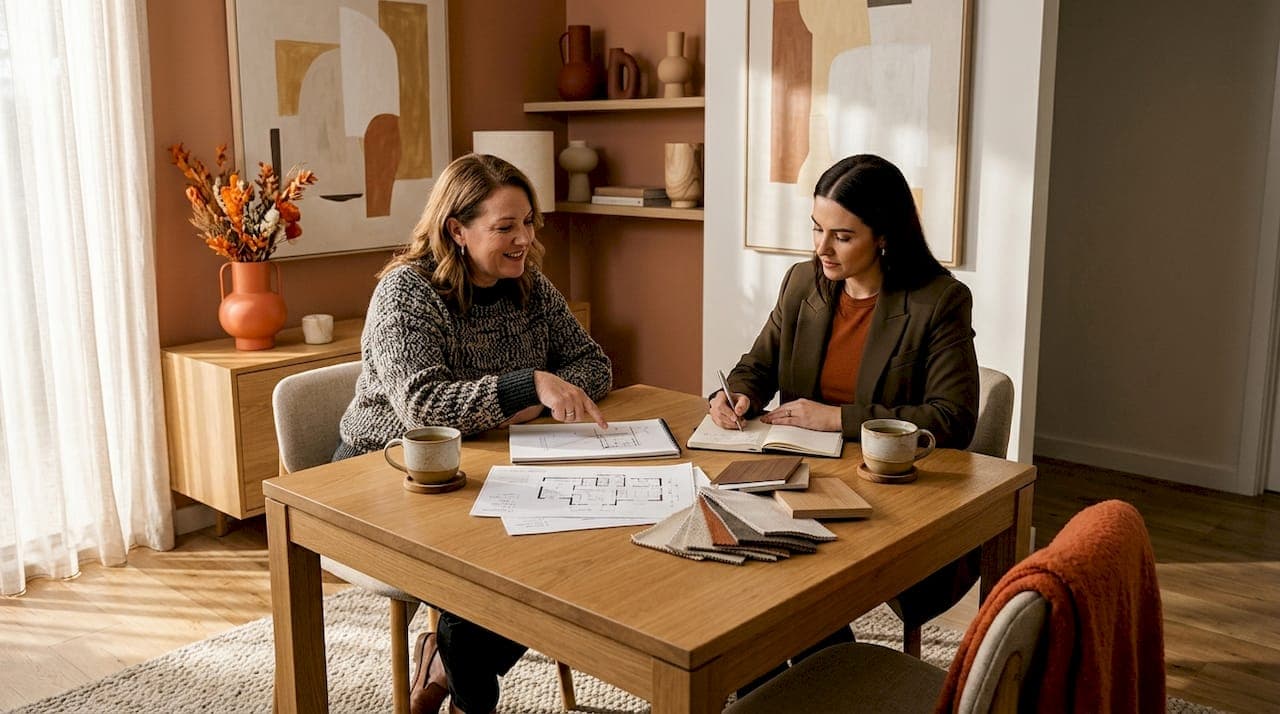
Appointing an interior designer is the formal process of engaging a qualified professional to translate your vision into a workable, well-resolved home. Done well, it is one of the highest-value decisions you can make on a residential project. Done poorly, or too late, it costs you money, time, and the kind of design quality that cannot be retrofitted. This guide covers the full interior design hiring process: from writing your brief and sourcing candidates to interviewing, comparing fees, and signing a contract that protects you. Whether you are refurbishing a period terrace in Bristol or building a new home in west London, the steps are the same. The details are what matter.
When should you appoint an interior designer?
The single most common mistake homeowners make is appointing an interior designer too late. Early appointment allows a designer to influence layout, lighting positions, material selections, and finishes before walls go up and decisions become permanent. Appoint them after the build has started and their role shrinks to styling and procurement. That is a fraction of the value they can add.
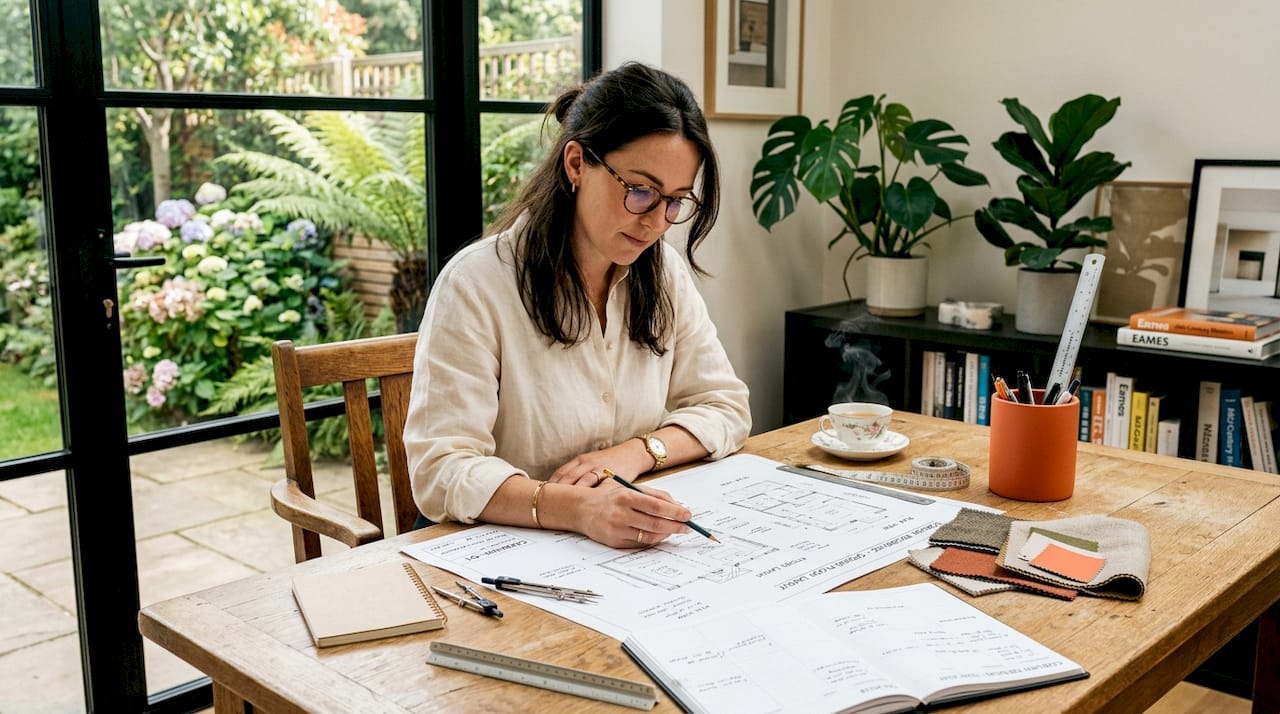
The ideal moment to bring in a designer is at the start of the planning phase, before contractor appointments and certainly before RIBA Stage 3 (Developed Design). Fabric and finish selections made at RIBA Stage 3 avoid downstream delays, procurement bottlenecks, and certification issues that are expensive to resolve later. A designer who is present at this stage can coordinate with your architect and structural engineer, not simply react to their decisions.
The practical benefits of early involvement include:
- Layout input: Circulation routes, room proportions, and built-in storage are hardest to fix after construction begins.
- Lighting design: Structural cabling for lighting schemes must be specified before first fix. Retrofitting is costly.
- Material lead times: High-quality tiles, bespoke joinery, and imported stone can carry lead times of 12 to 20 weeks. Early specification avoids programme delays.
- Budget control: A designer who understands your total budget from the outset can steer procurement decisions before costs are committed.
Pro Tip: If your project involves planning permission or a structural engineer, treat the interior designer appointment as part of the same early mobilisation. Brief them alongside your architect, not after.
How to prepare your project brief
A well-structured client brief is the single document that separates productive designer relationships from expensive misunderstandings. Client briefing captures functional requirements, aesthetic direction, budget parameters, and programme milestones, reducing misalignment and scope creep before it starts. It is not a single conversation. It is an iterative process that includes site visits, structured questionnaires, and formal client approvals.
Before you meet any designer, prepare the following:
- Room-by-room functional requirements. How does each room need to work? A kitchen that doubles as a homework space has different requirements from one used purely for cooking. Be specific about storage, circulation, and daily routines.
- Aesthetic references. Collect images from Houzz, Pinterest, or magazine tear-outs. You do not need to know the style vocabulary. You need to show what you respond to, and what you do not.
- Budget parameters. State a realistic range, not a floor. Designers who know your ceiling can make better procurement decisions. Interior designers typically charge 10 to 20% of total project costs, and trade pricing on materials often offsets a significant portion of that fee.
- Programme milestones. When do you need to be in the property? Work backwards from that date to understand when decisions must be made and when procurement must begin.
- Procurement approach. Will the designer manage purchasing, or will you? This affects fee structure and scope significantly.
Pro Tip: Update your brief whenever scope changes. A brief written at the start of a project that is never revised becomes a source of disputes, not a reference document.
| Brief element | What to include |
|---|---|
| Functional requirements | Room-by-room use, storage needs, circulation priorities |
| Aesthetic direction | Image references, materials you like or dislike |
| Budget parameters | Total budget range and any fixed cost limits by room |
| Programme milestones | Completion date, key decision deadlines, procurement windows |
| Procurement approach | Who buys what, trade accounts, and supplier preferences |
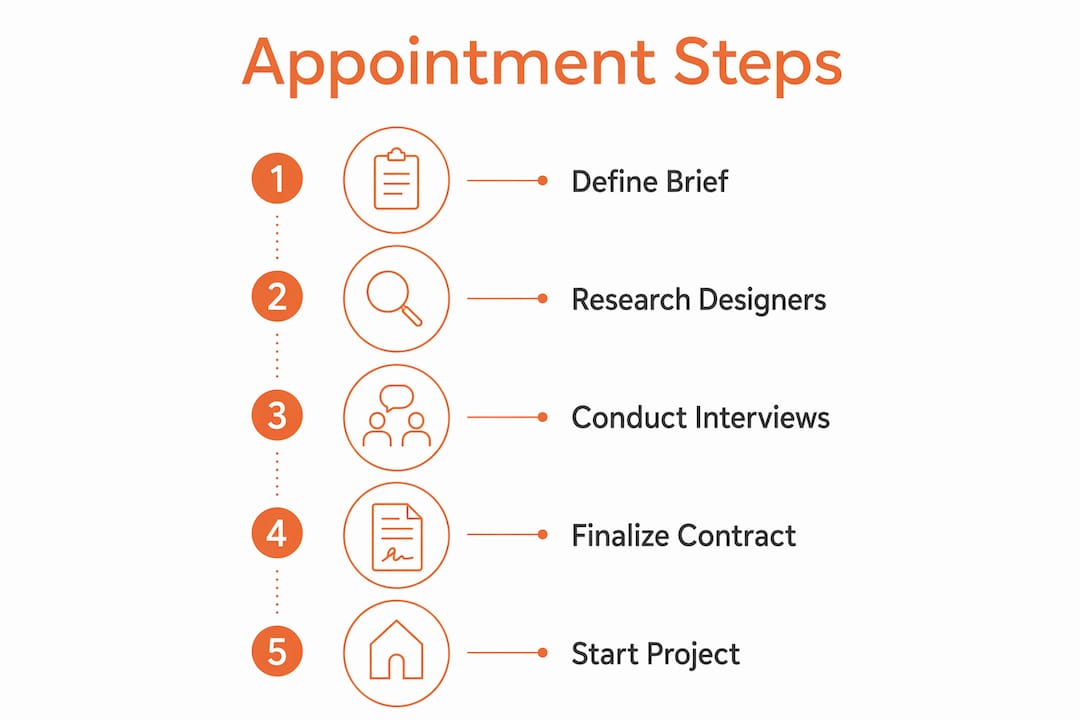
Where to find qualified interior designers in London and the South West
Referrals and portfolio research consistently produce better matches than relying on a single Google search. A recommendation from someone whose home you admire carries more weight than any directory listing. That said, several platforms give you structured access to portfolios and verified reviews.
Useful sources for finding an interior designer in London and the South West include:
- Houzz: The most widely used residential design platform in the UK. Filter by location, project type, and budget range. Read reviews carefully, particularly comments about communication and budget management.
- BIID (British Institute of Interior Design): The professional body for interior designers in the UK. Its member directory lists qualified practitioners who have met competency standards. This matters when you are appointing someone to manage significant procurement spend.
- Local architect referrals: If you are already working with an architect, ask who they have worked with successfully. Designers who have an existing relationship with your architect will integrate more smoothly into the project team.
- Social media: Instagram is particularly useful for seeing a designer's current work, not just their curated portfolio. Look for consistency of quality across different project types and scales.
- Word of mouth: Ask neighbours, friends, or colleagues in London or the South West who have recently completed a refurbishment. A direct recommendation from someone with a comparable project is the most reliable filter available.
When reviewing portfolios, look for projects that match your property type and scale. A designer who specialises in large new-build homes in Surrey may not be the right fit for a Victorian terrace conversion in Bath.
How to interview and select the right designer
Interviewing at least three designers before appointment is the standard professional practice. Bringing concrete inputs to those meetings, including your budget, must-haves, and visual references, improves the quality of proposals and makes comparison straightforward.
Use a structured set of questions across all three interviews:
- What is your fee model? Hourly, fixed fee, percentage of project cost, or a hybrid. Understand what is included and what triggers additional charges.
- How do you manage communication? Who is your day-to-day contact? How often will you receive updates? What is the process for approvals?
- How do you handle budget overruns or delays? The answer reveals how a designer manages risk, not just how they present ideas.
- What does your scope include at construction stage? Some designers step back after concept. Others manage contractor coordination through to snagging. Know which you are getting.
- Can you provide references from comparable projects? A designer who has completed a similar project in London or the South West will understand local contractor relationships and planning constraints.
When comparing proposals, use a simple table:
| Criteria | Designer A | Designer B | Designer C |
|---|---|---|---|
| Fee model | Fixed fee | % of project cost | Hourly |
| Construction-stage involvement | Yes | No | Partial |
| Communication process | Weekly updates | Ad hoc | Fortnightly |
| References provided | Yes | Yes | No |
Red flags to watch for include vague scope descriptions, reluctance to provide references, and fee proposals that exclude construction-stage involvement without explanation. Verifying how designers manage approvals and revision limits before appointment avoids mid-project repricing and delays.
Pro Tip: Ask each designer to walk you through a project that did not go to plan. How they describe it tells you more about their professional judgement than any portfolio image.
Understanding contract scope and managing scope creep
Unclear scoping is the primary cause of cost surprises and disputes in interior design projects. A detailed scope of work document is not a formality. It is the financial and operational framework for the entire engagement.
A well-constructed scope document should specify:
- Deliverables: Concept boards, technical drawings, specification schedules, procurement lists. Know exactly what you will receive and in what format.
- Revision limits: How many rounds of revisions are included? What is the cost of additional rounds? This is where many homeowners are caught out.
- Client approval timelines: When do you need to respond to proposals? Delays in client approvals are a common cause of programme overruns.
- Out-of-scope work: What is explicitly excluded? Contractor management, planning applications, and structural coordination are often out of scope unless specified.
- Change management process: How are scope changes priced and approved? A written change order process prevents verbal agreements becoming disputed costs.
One area that is frequently overlooked is the distinction between an interior designer and a principal designer under the Construction (Design and Management) Regulations. Statutory health and safety coordination is the responsibility of the principal designer, which is typically an architect or similarly qualified professional. Your interior designer is not automatically fulfilling that role. Confirm in your contracts who holds each responsibility.
| Scope element | Why it matters |
|---|---|
| Revision limits | Prevents open-ended design iterations that inflate fees |
| Change order process | Creates a written record of agreed cost adjustments |
| Out-of-scope exclusions | Avoids assumptions about contractor coordination or planning |
| Principal designer role | Clarifies statutory CDM responsibility separate from design |
Key takeaways
Appointing an interior designer successfully requires a clear brief, structured interviews, and a contract that specifies deliverables, revision limits, and change management before work begins.
| Point | Details |
|---|---|
| Appoint early | Engage a designer at planning stage to influence layout, lighting, and materials before construction begins. |
| Write a detailed brief | Cover functional needs, aesthetic references, budget, programme, and procurement approach before your first meeting. |
| Interview at least three | Compare fee models, construction-stage involvement, and communication processes across multiple candidates. |
| Scrutinise the scope | Confirm deliverables, revision limits, out-of-scope exclusions, and the change order process in writing. |
| Clarify CDM responsibility | Confirm who holds the principal designer role under CDM regulations. It is not automatically your interior designer. |
What I have learned from watching these appointments go wrong
The projects that run smoothly share one characteristic: the interior designer was in the room early, when the brief was still being written and the layout was still moveable. The projects that struggle almost always involve a designer who was brought in after the structural decisions were made and the contractor was already on site. At that point, the designer is working around constraints rather than shaping them.
The other pattern I see consistently is homeowners who treat the brief as a one-off document. They write it at the start, hand it over, and assume it remains accurate for the duration of the project. It does not. Scope changes, priorities shift, and budgets get revised. A brief that is not updated becomes a source of confusion rather than clarity.
On the question of fees, the 10 to 20% figure that is commonly cited is a starting point, not a ceiling. What matters more than the percentage is what it includes. A designer who charges 15% but manages procurement, contractor coordination, and construction-stage reviews is delivering substantially more than one who charges 12% for concept and specification only. Compare scope, not just numbers.
For homeowners in London and the South West specifically, local knowledge matters more than it is given credit for. A designer who understands the planning sensitivities around a listed building in Bath, or the contractor market in west London, brings practical value that no amount of aesthetic talent can substitute for.
— David
How Coburnproperty supports the design and build process
Coburnproperty works with homeowners in London and the South West from the earliest stages of a residential project through to completion. The focus is on ensuring that design decisions, including interior design appointments, are made at the right time and with the right information. When interior design and construction are coordinated from the outset, the result is a home that works in daily use, not just in photographs.
If you are at the stage of appointing a designer and want an independent view on how that fits into your broader project programme, the Design Advisory is where most conversations start. For clients who want full coordination across design and build, residential build management provides that oversight from brief to handover. You can also review the project portfolio to see how integrated design and build management works in practice.
FAQ
When is the best time to appoint an interior designer?
Appoint an interior designer at the start of the planning phase, before contractor appointments and structural decisions are made. Early appointment allows input on layout, lighting, and materials while changes are still straightforward.
How much does an interior designer cost in the UK?
Interior designer fees typically run from 10 to 20% of total project costs. Trade pricing on materials often offsets a portion of that fee, and the scope of what is included varies significantly between practitioners.
What should a client brief include?
A well-structured brief covers functional requirements room by room, aesthetic references, budget parameters, programme milestones, and your preferred procurement approach. Update it whenever scope changes.
What is scope creep and how do I prevent it?
Scope creep occurs when project requirements expand beyond the original agreement, often without corresponding fee adjustments. Prevent it by specifying deliverables and revision limits in the contract and using a written change order process for any additions.
Do I need a separate principal designer if I have an interior designer?
Yes, in most cases. The principal designer role under CDM regulations carries statutory health and safety responsibilities that an interior designer does not automatically fulfil. Confirm responsibility in your contracts before work begins.
Recommended
- Residential Interior Design & Project Portfolio - Coburn - Residential Build Management
- Residential Design Advisory & Early Design Review - Coburn - Residential Build Management
- Coburn - Residential Build Management
- Current Residential Design & Consultancy Projects - Coburn - Residential Build Management